



The Power of Both: Sauna and Cold Plunge, Individually and Combined


The most interesting things in nature work through contrast. Exertion and rest. Expansion and contraction. Contrast is one of the body's most reliable mechanisms for adaptation: stress it, then let it recover. It's a rhythm the body understands well.
Sauna and cold plunge work this way. Separately, each is effective. Together, they are something else entirely.
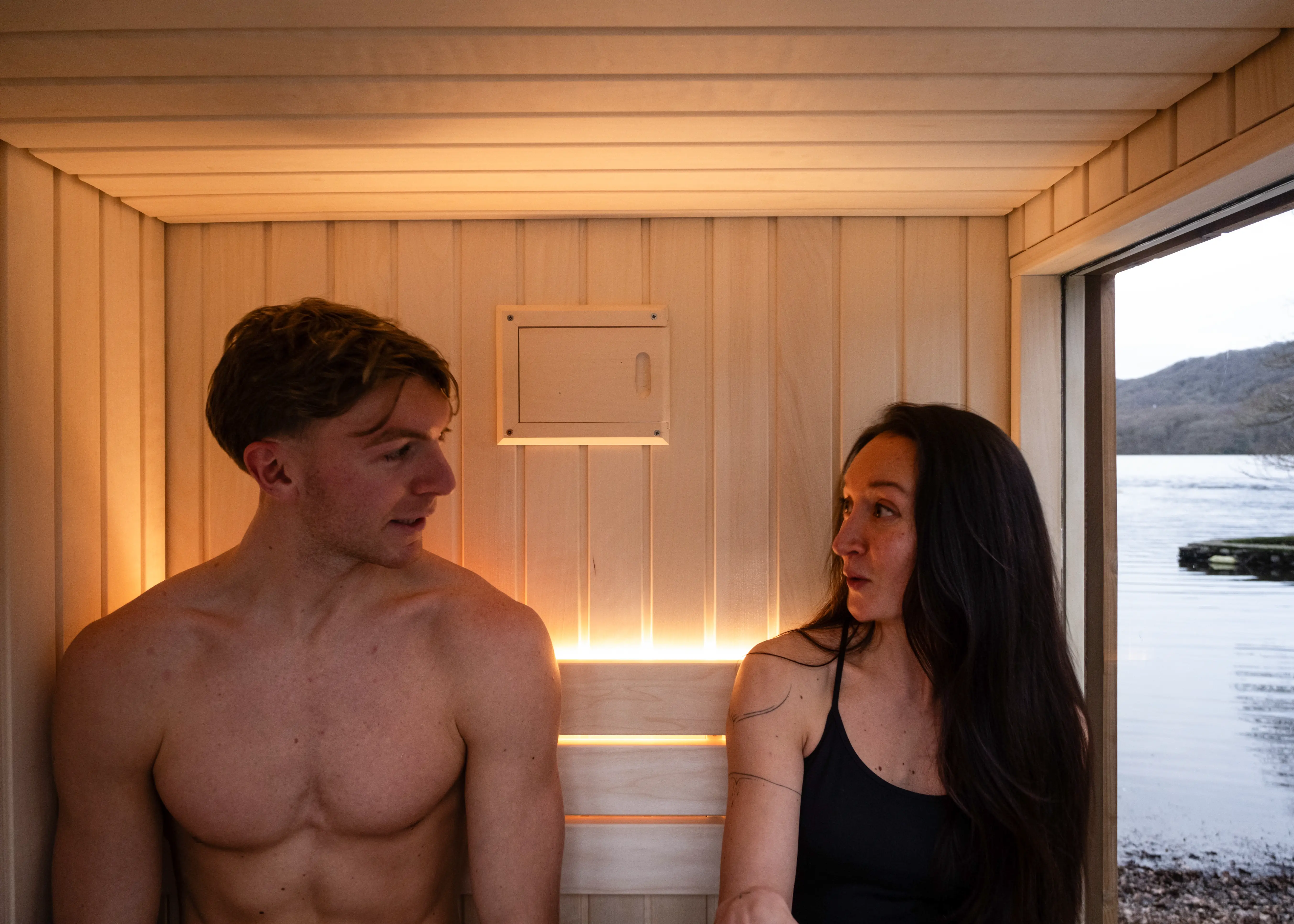
What Sauna Does
Heat is deceptively simple. You sit. You sweat. But the physiological response is a full systemic event.
As core temperature rises, blood vessels dilate and circulation increases. Your heart works harder, blood is pushed through tissues, and the body clears waste products it might otherwise accumulate over days of relative inactivity.
Beyond the physical, heat has a quality of psychological release. Sitting in uncomfortable warmth, deliberately, demands a kind of stillness. The nervous system gradually shifts. Breathing slows. Muscles release tension. The body moves toward a parasympathetic state, and the mind follows.
Regular sauna use, particularly the Finnish kind practised over years, is associated with measurable reductions in cardiovascular risk and improved mental resilience. The deliberate act of being still inside discomfort, allowing it rather than escaping it, builds something. Call it tolerance, if tolerance sounds more useful than wisdom.
What Cold Plunge Does
Cold plunge is a different experience. Where sauna expands, cold compresses. Where heat relaxes, cold activates.
The moment you enter cold water, the body responds without negotiation. Blood vessels contract, drawing blood toward the core. Adrenaline releases. Heart rate spikes. Breathing shortens. The whole system snaps to attention in a way heat alone doesn't produce.
The anti-inflammatory response is significant. Cold immersion reduces exercise-induced swelling and helps clear metabolic waste from soft tissue. The sustained dopamine elevation that follows can last for hours, contributing to the clarity regular practitioners describe consistently.
Cold teaches something specific: that discomfort doesn't require reaction. The nervous system learns to respond without panic. Recovery from stress becomes faster and more efficient.

What Changes When You Combine Them
The alternation between vasodilation and vasoconstriction creates a powerful pumping effect through the circulatory system. Fluid pooled in soft tissue is driven back into circulation. Metabolic waste clears faster than either practice achieves in isolation. Recovery accelerates.
But the more significant effect is systemic. The body is asked, repeatedly, to move between two opposite states. Over time, it becomes better at making that transition. The nervous system's capacity to shift between sympathetic and parasympathetic states sharpens. The adaptive capacity builds not just during the session, but across daily life.
You train the system to move. It learns to move better.
Why Most People Miss This
Most people who discover sauna or cold plunge use one or the other. Each is compelling on its own, and adding a second discipline takes more time and commitment. What gets missed is that the combination doesn't just add benefits. It multiplies them. The contrast itself is the mechanism. None of this happens in sauna alone, or cold alone.
A sauna will relax you. A cold plunge will sharpen you. Both, in sequence, will reset you.
The people who practise contrast therapy consistently over months and years describe a shift in baseline: general resilience, clarity that accumulates, a body that recovers better and a mind that holds up more consistently under pressure. That's not the result of one tool. It's the result of the rhythm between two.
Both, every time.

Lets talk!